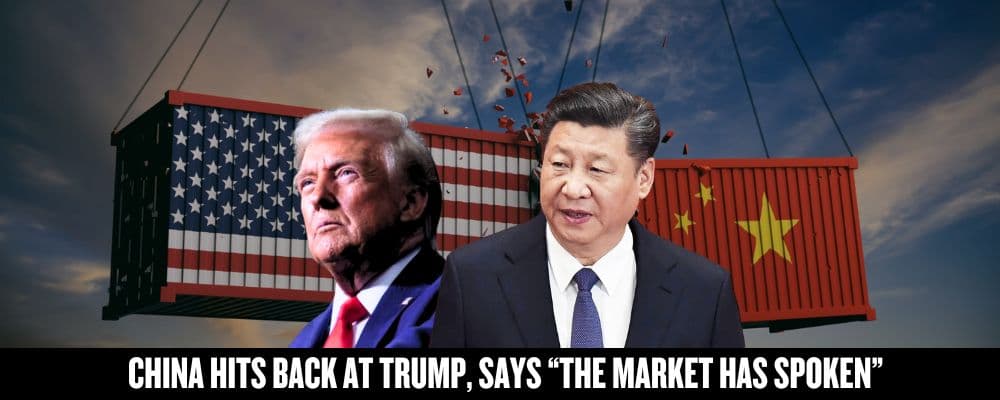
In a significant escalation of trade tensions, China has imposed a 34% tariff on all U.S. imports, mirroring the recent tariff hike by President Donald Trump on Chinese goods. This retaliatory measure has intensified fears of a global recession, leading to a sharp decline in global stock markets.
- China imposes extra 34% tariffs on all US goods from April 10
- China puts export restrictions on some rare earths from April 4
- China adds 11 US bodies to 'unreliable entities' list
- Measures against US come in wake of Trump tariffs
- ‘China panicked', Trump says in response
China added 11 U.S. bodies to the "unreliable entity" list, which allows Beijing to take punitive actions against foreign entities, including firms linked to arms sales to democratically governed Taiwan, which China claims as part of its territory.
Market Impact
The announcement triggered a substantial sell-off across major financial markets:
U.S. Markets: For the week, the S&P 500 fell 9.08%, the Nasdaq declined 10.02%, and the Dow fell 7.86%. The Russell 2000 Small Cap Index dropped 9.70%.
The Chinese yuan has dropped to its lowest level in seven weeks and stock markets slumped on Thursday after Trump unveiled his reciprocal tariffs that were particularly heavy on China.
Economic Concerns
The International Monetary Fund (IMF) and Federal Reserve Chair Jerome Powell have expressed concerns that the escalating tariffs could significantly hinder global economic growth and contribute to rising inflation. Powell indicated that the Federal Reserve is not in a hurry to cut interest rates despite these trade-related inflation risks, a stance that contrasts with President Trump's calls for immediate rate reductions.
Outlook
Analysts are increasingly concerned that the mounting trade war and monetary policy uncertainties could trigger a global recession. J.P. Morgan has raised the probability of a global recession by the end of the year to 60%, up from a previous estimate of 40%. Investors and policymakers are closely monitoring the situation, seeking clarity on future tariff policies and potential avenues for de-escalation to stabilize the global economy.
Discover more market insights and analysis